Sign In
Upcoming Event
 Free Newsletter


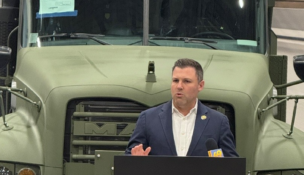
Rep. Jim Haddock, D-Luzerne/Lackawanna, has authored the first bill in Pennsylvania to protect workers in the meat packing and food processing industry. PHOTO/PACAST
Bill to protect workers passes Pa. House
Ed Gruver//June 10, 2024//


 Listen to this article
A bill to help protect workers at meat packing and food processing facilities has been passed by the Pennsylvania House of Representatives.
Authored by state Rep. Jim Haddock, D-Luzerne/Lackawanna, House Bill 2235 would be the first in Pennsylvania to specifically protect workers in the meat packing and food processing industry.
The bill moves to the state Senate for consideration.
“My proposal would ensure workers at meat packing and food processing facilities in Pennsylvania have an active role in safety on the job and receive proper training in the language they speak,” Haddock said in a statement.
“These workers are the definition of essential workers. Without them, our grocery store shelves would sit empty, and Pennsylvania’s economy would suffer. They deserve protections to keep them safe at work. This commonsense approach to workplace safety would ensure that not only is the food we put on our tables safe, but the workers are as well.”
H.B. 2235 would apply to employers with 100 full-time workers and is aimed at achieving the following:
- Create safety training requirements for employees of the meat packing and food processing industries. The training would have to be provided in languages that at least 5% of their employees speak.
- Supply workplace documents in languages that workers understand.
- Establish facility health and safety committees, including employee and employer representatives.
Per a release, Pennsylvania has over 2,300 food processing facilities and ranks among the top in the nation for food processing exports. Food produced and manufactured by the industry is strictly regulated by the U.S. Department of Agriculture, the federal Food and Drug Administration, and various state-level regulations.
Recent data compiled by the Occupational Safety and Health Administration (OSHA) revealed that in the 29 states covered under federal OSHA, 27 workers a day suffered amputation or other hospitalization between 2015 and 2023 in meat packing alone.
Some of the most frequently reported injuries are repetitive strain injuries, chemical burns, exposure to hazardous chemicals, caught-between falls, lacerations and cuts, amputations, and more, according to the release.
Many of the injuries are associated with improper training and communication, crowding on lines, exhaustion, unsafe working conditions, absence of protective equipment, and underlying injury.