Sign In
Upcoming Event
 Free Newsletter

Delivering engagement, diversity and inclusion for the Girl Scouts
Nicole Chynoweth//September 28, 2020
Delivering engagement, diversity and inclusion for the Girl Scouts
Nicole Chynoweth//September 28, 2020//


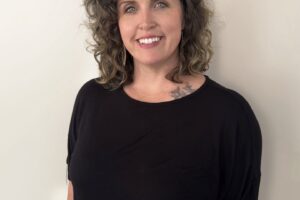
Girl Scouts wasn’t a very well-known program in Alejandra McGinley-Sepulveda‘s community in Puerto Rico when she was growing up. She remembers hearing about the organization during cookie sale season, but that was the extent of her experience with it as a child.
Today, McGinley-Sepulveda is Senior Director of Business Development for Girls Scouts of Eastern Pennsylvania, for which she manages four teams – product program (the legendary cookie sales), retail, print and production and the facility rentals team, all earned revenues for the organization.
Her dedication to the mission goes beyond the responsibilities of her job title, though. McGinley-Sepulveda is one of six Latinx Engagement Mission Delivery Coaches for Girl Scouts of the USA, the first cohort of its kind in the national organization’s mission delivery coach program. They travel nationally – now mainly virtually – to design and deliver their own curriculum to councils on how to improve engagement of Latinx girls and their families to provide the best possible Girl Scouts experience to them. Additionally, she chairs the diversity, equity, and inclusion committee for the Eastern Pennsylvania organization.
McGinley-Sepulveda shared her thoughts on the importance of diversity, equity, and inclusion in the workplace and what the work means to her. Answers have been edited for length and clarity.
 What do you like about working for Girl Scouts?
I feel like the number one thing I love is we work with a mission. Every day we come to the office or do our work, there’s a reason behind it. There are thousands of girls who count on us. To me personally, it’s something that I can also share with my daughter, Marina, and not everyone gets to say that about their work.
Not every day is the same. We wear a lot of hats. I love the spontaneity of it all and the family feeling we have amongst each other.
Beyond your main role, you’re chair of the diversity, equity, and inclusion committee. How did you get involved in that?
The committee started about two years ago. At that point, we had another chair of the committee, and I was one of three Hispanic team members out of our nearly 100-person staff. I immediately felt the need and responsibility to represent Latinx girls in our council.
I was part of the committee as a team member until about six months ago when the chair left the organization, and I was nominated to be the chair of the committee. At first I was like, ‘I don’t think I’m ready for it!’ But it’s an amazing opportunity. Now I’m just one of two Hispanic people, so I have even more of a responsibility to represent.
I have the responsibility to teach my daughter that we are all equal and we need to be diverse and inclusive.
What has the committee worked on so far?
We worked to audit our membership and staff and understand where the gaps were both internally and externally. We realized quickly, obviously as many organizations have, that we have huge gaps to fill, so we started working internally first. We cannot preach what we don’t practice, so we cannot say to our members that we are a diverse organization if we are not diverse within. We started developing diversity, equity, and inclusion training for all of our staff and volunteers. As everybody else, we continue learning. We are not experts. We are all learning. I myself have started an online certification on diversity. We’ve brought experts in to audit our organization and to train our staff.
Can you describe an eye-opening moment for you in terms of learning about diversity and inclusion?
I was born and raised in Puerto Rico up until I was 24 or 25 years old. Growing up, I never felt that I didn’t belong. Everyone around me was Puerto Rican. Like I tell my husband, we come in all sizes, colors, and shapes. To me, that diversity and inclusion was very natural. I never walked into a room and felt I didn’t belong. Then I moved to the U.S. I have been here for seven years, and I was very quick to have that feeling of walking into a room and immediately noticing I’m the only brown person in the room, I’m the only Hispanic person in the room.
My daughter was 5 years old and in kindergarten. My daughter is very outspoken and she came to me and said, ‘Mom, did you know that we are brown?’ I’m thinking to myself, ‘What do you mean?’ To me, back home, skin colors were so diverse and varied, I never thought of myself as anything else than just me. The fact that she labeled herself hit me. She became obsessed with Martin Luther King, Jr. after that. She said, ‘Mom if we were to live during the times of Martin Luther King, would we have been with the white group or black group because we are brown?’ I was dumbfounded. I played the reverse psychology card and I said, ‘Where do you think we would sit? And she said, ‘I think we would sit with the black group because we’re not white enough to be white.’ I decided I don’t want my daughter to live with a label. We are all amazing in our individuality.
What do diversity and inclusion mean to you?
Diversity, to me, means the equal representation of all identities within a community. I use the word community because as a Hispanic person, community is very important to me. It’s not just my family. It’s my church, the grocery store I choose to go to. All those things are part of our community. Having a community that is equally represented is diversity.
I have this comparison I learned from one of the mission delivery coaches. Diversity is to be invited to the party. Inclusion is when you started playing the music I dance to and you dance with me. Inclusion is making sure those individuals are part of the community, and they’re involved, and their opinion is as important as anybody else. We love to dance in our culture, so that metaphor really clicked with me right away.