Sign In
Upcoming Event
 Free Newsletter


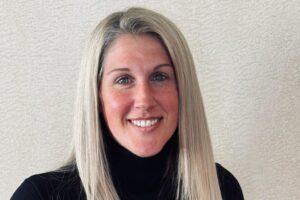
Emily Lyter
Good Shepherd helps patients with assistive tech
Stacy Wescoe//November 7, 2025//


A Conversation With: Emily Lyter, administrative director of Good Shepherd Learns and Creates at Good Shepherd Rehabilitation
LVB: Patients that you treat at Good Shepherd often need assistive devices and technologies. How do you help them find what they need?
Lyter: Typically, it’s the physical, occupational or speech therapist or the rehabilitation team making a recommendation to the patient for the specific device or technology.
Sometimes, it’s a 3D-printed device that we can print in our 3D printing lab at Empower+ for someone following a stroke, as an example.
Other times, it might be a category of technology like smart home devices, where patients and caregivers can come to Empower+ and learn more about these technologies that may be available off the shelf at a local retailer; they usually are accessible outside of a prescription.
“At Empower+, we can talk about those kinds of technologies, people can interact with those technologies and they can decide what might be best for them.
LVB: Tell me more about the empower+ space and how it operates.
Lyter: Empower+ is a free, interactive community innovation and demonstration space located inside Good Shepherd Rehabilitation Hospital in Center Valley.
We display different categories of technology that may fill a specific patient, family or caregiver need and we educate about that kind of technology. For instance, virtual reality or wearable technologies. We don’t sell technology; rather, Empower+ is specifically for education and demonstration.
We also host various free community events, like how to use the accessibility functionality in your smartphones or how to travel with a disability.
Additionally, Good Shepherd hosts various school events for college students at Empower+. We have our 3D printing lab, where we have printed more than 1,500 items since opening it in 2023.
We also hold “maker sprints,” which are events that bring together community academia, clinicians and patients to problem solve and rapidly prototype new solutions.”
LVB: What are the most common aids patients need?
Lyter: There are many different types of aids available to someone. Patient needs can vary so greatly. As a result, we identify the best aids based on the patient’s very specific needs. We can modify or create something through 3D printing to meet that specific need if there is not an off-the-shelf solution for the patient.
LVB: What are some of the technologies you might expect to have available to patients in the future?
Lyter: We continue to see more smart home and smartphone accessibility features, but often people don’t know what they have. In the future, you may see more wearable technologies that provide data to the individual and perhaps to their health provider about their health status. You could have more wearables synched up with health monitoring apps. You might also start to see more virtual and augmented reality for chronic pain management and physical and/or occupational therapy treatment.