Sign In
Upcoming Event
 Free Newsletter

Shapiro Administration announces $22M investment for support services workforce
Ed Gruver//August 8, 2024

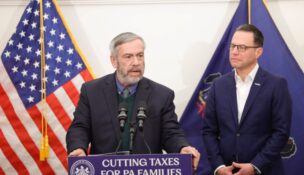
Gov. Josh Shapiro said the investment will help to provide loan forgiveness to those in the support services workforce. PHOTO/PACAST
Shapiro Administration announces $22M investment for support services workforce
Ed Gruver//August 8, 2024//


The Department of Drug and Alcohol Programs (DDAP) is awarding $22 million to assist approximately 400 practitioners within the substance use disorder treatment, prevention, case management and recovery support services workforce.
The investment was announced by the Shapiro Administration. The program prioritizes substance use disorder treatment (SUD) professionals who work in rural areas experiencing SUD workforce shortages and those who provide SUD services in counties with underserved minority populations.
Gov. Josh Shapiro and DDAP Secretary Dr. Latika Davis-Jones met recently with recipients of DDAP’s substance use disorder (SUD) student loan repayment program during a roundtable discussion at Dauphin County Drug & Alcohol Services. DDAP provides student loan repayment as an incentive to retain SUD practitioners, administrators, and supervisors who commit to continuing to provide services.
“The reality is, this epidemic we’re facing, is as a result of the greed and the lies of the pharmaceutical executives and a handful of pharmaceutical companies who said these painkillers weren’t addictive,” Shapiro said in a statement.
“I was one of about four attorneys general in the whole country that led an effort to hold these companies finally accountable for what they did. They have paid billions of dollars to the Commonwealth of Pennsylvania to support people who are in recovery. The supports are only as good as the staff and the team who are available to deliver them.
High rates of turnover and shortages of health care professionals in the SUD field are placing increased pressure on employee recruitment and retention, and limited access to care for Pennsylvania residents seeking treatment and support. At Dauphin County Drug and Alcohol Services, 16 workers have resigned across all departments since 2021, with over 60 percent of those resignations in the case management or prevention fields.
Through this SUD loan repayment program, county offices will be able to retain workers who provide these life-saving prevention, treatment, and recovery programs.
“We’re easing the burden of student debt, and in many cases, totally eliminating it,” said Davis-Jones. “This program is one more example of the Shapiro Administration’s commitment to strengthening drug and alcohol treatment and systems of supports in Pennsylvania. It’s a win-win; helping to incentivize SUD professionals to remain in this field which will, in turn, benefit our loved ones, friends and neighbors who need SUD services most.”
The SUD loan repayment program is designed to help staff in DDAP-licensed drug and alcohol treatment facilities, as well as staff providing Single County Authority (SCA)-funded prevention, case management, and recovery support services. The program allows workers in the field who provide SUD treatment, prevention, case management and/or recovery support services for SUD at an approved practice site to receive repayment assistance for educational loans.
Qualifying professions include physicians, psychiatrists, registered nurses, certified registered nurse practitioners, certified addictions registered nurses, Licensed social workers, certified clinical supervisors, certified alcohol and drug counselors, counselors, case managers, prevention specialist/managers, and administrative staff.
Grant agreements will be awarded based on the availability of funding. The funding will be up to $75,000 for full-time professionals and $37,500 for half-time professionals. Final award amounts will be determined based on the amount of grant assistance being requested and additional criteria.
“One of the first issues we diagnosed was that we just didn’t have enough people doing this work,” said Shapiro. “We were able to use a good portion of that money to provide loan forgiveness for people who were doing the important work in helping those in recovery.”