Sign In
Upcoming Event
 Free Newsletter


PHOTO/GETTY IMAGES
COVID leaves financial strain on health care systems
Cris Collingwood//July 10, 2023//


 Listen to this article
Health care systems are facing financial challenges due to the shortage of health care workers, drug prices and other issues following the COVID-19 pandemic.
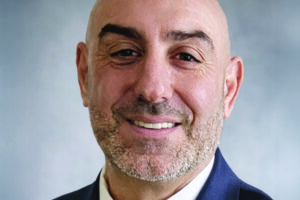
“2022 was the most challenging year in recent memory,” said Jeffrey Bechtel, senior vice president, Health, Economics and Policy for the Hospital Association of Pennsylvania.
“More than half the hospitals in the United States are operating at a loss,” Bechtel said. “And the trend will continue as rising costs are outpacing payments.”
Despite that, Bechtel said most Pennsylvania hospitals are not at immediate risk of closing, but if the trend continues, some will find it hard to continue to operate.
Bechtel said this is a “perfect storm” with workforce shortages, increased staffing costs, and drug and supply increases.
That coupled with Medicare and Medicaid payments not keeping pace with the cost of care, hospitals are hard pressed to balance the bottom line, he said.
Local health care systems said they have faced the same challenges but are confident they can weather the “storm” by changing the way health care is delivered.
“We view these economic challenges as an opportunity to demonstrate leadership in the time post-COVID, by transforming how care is delivered and enhanced for everyone,” said John Lines, director, Regional Communications, University of Pennsylvania Health System, parent of Lancaster General Hospital. “That includes continuing our commitment to making investments to improve and expand the care we provide, in our workforce, and in the communities we serve.”
Penn State Health continues to identify and implement improvements and efficiencies to control costs while advancing its long-term strategy, said Barbara Schindo, media relations specialist, Penn State Health.
“These efforts are making a difference and starting to offset the financial pressures, and we expect these improvements to continue,” Schindo said. “We have also made recent investments, including opening two new hospitals, as part of our long-term strategy to build a world-class network that provides health care close to where people live.”
Edward Karlovich, executive vice president and CFO of UPMC said the health systems commitment to its core mission didn’t wane during the financial effects of COVID.
“We substantially invested for the long-term, improving access to our clinical care and community services throughout all our regions with emphasis on meeting strong patient preference for care to be provided more conveniently in ambulatory settings closer to home,” Karlovich said. “Patient volumes continued to shift from inpatient to outpatient settings.”
Compared to a year ago, UPMC Health Plan enrollment increased from 4 million to nearly 4.5 million members, a 9% surge, due to the growth across many products, including Medicare, behavioral health and the statewide expansion of the Medicaid physical health managed care organization.
“During one of the most challenging and turbulent times in health care, WellSpan’s financial performance has remained solid as has been noted by affirmed bond ratings in support of the health system’s position, even while other health systems are facing significant losses,” said Laura Buczkowski, CFO and executive vice president for WellSpan Health.
Moody’s Investor Services issued a stable outlook for WellSpan’s bond rating, pointing to a “distinctly leading market position.” she said.
“The economic headwinds facing WellSpan and other systems regionally and across the country require us to find cost savings in everything that we do. Workforce shortages, inflation and declining reimbursements each require us to reimagine how we face these challenges and proceed carefully in this new normal,” Buczkowski said.
“WellSpan’s executive leadership is also focused on the development of strategic partnerships and projects that are moving the organization to a value-based care model that can optimize our performance while providing the best quality, experience, and lowest cost for our patients,” she added.
Bechtel said one of the key factors in hospital solvency is reimbursements from Medicare and Medicaid. For inpatient care, Medicaid pays 81 cents on the dollar and Medicare pays 84 cents.
“Fifty-five percent of Pennsylvania hospitals receive half their revenue from Medicare and Medicaid,” he said. “When they don’t get proper reimbursement, it puts pressure on the system.”
While there are no quick fixes, Bechtel said improving those payments and creating a comprehensive strategy to grow and support the workforce can help.
To that end, the Healthcare Task Force is creating a roadmap to provide policy recommendations to address making education more accessible and affordable.
Bechtel said scholarships and loan forgiveness are two possibilities to encourage people to enter the fields.
There also needs to be incentives for clinicians to work as educators to increase the slots available for those who choose to go into medicine.
UPMC said amid staffing challenges over the past two years, a major part of UPMC’s $300 million investment in its workforce during 2022 has been the development of innovative programs that focus on retaining, recruiting and building a workforce pipeline.
In early 2023, UPMC announced its commitment to increase the minimum wage for non-union employees to $18 an hour by 2025 for Pittsburgh and central/north central hospitals and associated facilities. Starting salaries at all UPMC’s other sites across Pennsylvania, New York and Maryland will reach $18 an hour by 2026.
Bechtel said some things hospitals can do, which are being done here, are expanding telehealth offerings, creating hubs to consolidate services, creating outpatient emergency rooms for rural communities and using team nursing models to free up RNs.
“They need to find efficiencies,” he said.