Sign In
Upcoming Event
 Free Newsletter

Employers face rising costs and coverage decisions on glp-1 drugs
Brian Orsinger, CEBS, GBDS, VBS, Contributing Writer//June 25, 2026

PHOTO/zimmytws, GETTY IMAGES
Employers face rising costs and coverage decisions on glp-1 drugs
Brian Orsinger, CEBS, GBDS, VBS, Contributing Writer//June 25, 2026//


 Listen to this article
Summary:
- Glp-1 drugs cost over $1,000 per month per patient
- McConkey Insurance & Benefits advises on employer coverage strategies
- Demand for glp-1 medications growing rapidly among employees
A few years ago, GLP-1 medications were primarily known as treatments for type 2 diabetes. Today, they’re a cultural phenomenon and a significant cost pressure on employer-sponsored health plans. Drugs like semaglutide have demonstrated meaningful results for weight loss, cardiovascular risk reduction, and a growing list of other conditions, and employee demand for coverage is rising alongside their visibility. For employers, the question is no longer whether GLP-1s will come up in a benefits conversation. It’s whether you have a clear, defensible position when they do.
What GLP-1 drugs are and why they matter
GLP-1 receptor agonists were originally developed to help manage blood sugar in patients with type 2 diabetes. Their weight loss effects were observed early, and subsequent clinical development has produced medications specifically approved for chronic weight management. More recently, clinical trials have demonstrated cardiovascular benefits for patients with obesity or overweight and established heart disease, expanding the clinical rationale for coverage beyond weight loss alone.
The results these medications produce are not trivial. Patients in clinical trials lost significantly more weight than with any previous pharmacological intervention, and the downstream effects on conditions like sleep apnea, joint disease, and metabolic syndrome are an active area of research. The clinical case for these drugs is real, which is part of what makes the coverage question complicated.
The cost reality
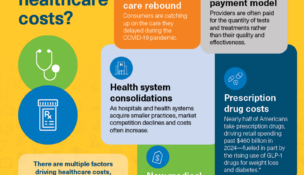
The clinical promise of GLP-1 medications comes with a significant price tag. Brand-name GLP-1 drugs approved for weight management can cost more than $1,000 per month per patient without rebates or negotiated discounts. For a self-funded employer with even a modest number of employees on these medications, the annual spend can be substantial.
Unlike a one-time specialty drug cost, GLP-1 coverage creates an ongoing liability. Patients who discontinue the medication typically regain much of the weight they lost, which means coverage tends to be open-ended rather than time limited. For plan sponsors evaluating their exposure, that distinction matters. It’s not a single high-cost claim. It’s a recurring line item that grows as more employees become aware of and interested in the medication.
The utilization trajectory is also worth considering. Demand for GLP-1s has grown rapidly, and there is no indication it will plateau soon. Biosimilar versions are expected to enter the market in coming years, which may eventually reduce costs, but near-term pricing remains high.
The case for coverage
Employers who choose to cover GLP-1 medications for weight management often point to the long-term health cost argument. Obesity is a driver of some of the most expensive conditions an employer plan covers, including type 2 diabetes, cardiovascular disease, musculoskeletal issues, and certain cancers. If effective treatment reduces the downstream incidence of those conditions, the total cost picture over time may look different than the drug cost alone.
There is also a workforce and retention dimension. As GLP-1 coverage becomes more common among large employers and benefits-competitive organizations, its absence becomes more noticeable. For employers competing for talent in a tight labor market, benefits design decisions like this one carry weight beyond the claims ledger.
The case for a more cautious approach
None of the long-term cost offset arguments have been fully validated in real-world employer plan data yet. The clinical trials showing downstream health benefits were conducted in specific patient populations over defined time periods. Whether those benefits translate to meaningful claims savings for the average employer plan and over what time horizon remains genuinely uncertain.
In fact, some studies show that as patients revolve in and out of utilizing GLP-1’s, that overall prescription drug costs for users (including companion medications for anti-nausea, etc.) three years after initiating treatment were significantly higher for users vs. non-users.
There are also plan design questions that don’t have clean answers. Should coverage be limited to employees who meet specific clinical criteria? What prior authorization or utilization management requirements make sense? How do you handle employees who go off the medication? Without a clear clinical management framework, open-ended GLP-1 coverage can be difficult to budget and harder to walk back once offered.
For smaller or self-funded employers without the risk pool to absorb high-cost pharmacy trends, the near-term cost exposure is a legitimate concern even if the long-term argument is compelling.
Building a position that works for your plan
The employers navigating this question most effectively aren’t simply saying yes or no to GLP-1 coverage. They’re building a thoughtful policy that reflects their workforce, their financial capacity, and their benefits philosophy. That might mean covering GLP-1s for diabetes management but not weight loss, or offering coverage with clinical criteria gating and a structured utilization management program attached. It might mean monitoring the biosimilar pipeline before making a coverage decision or benchmarking what peer employers in the region are doing.
What it shouldn’t mean is arriving at renewal without a position. Employees are asking. Carriers are pricing for it. And the decision, once made, is difficult to reverse without affecting morale and trust.
Brian Orsinger, Employee Benefits Executive Consultant at McConkey Insurance & Benefits can be reached at [email protected].
McConkey Insurance & Benefits, licensed in nearly 50 states and serving clients in more than 20 countries, has operated independently in York since 1890