Sign In
Upcoming Event
 Free Newsletter

Head of HAP reflects on state’s health care as he looks toward retirement
Cris Collingwood//July 7, 2023

Andy Carter – PHOTO/ LAUREN LITTLE
Head of HAP reflects on state’s health care as he looks toward retirement
Cris Collingwood//July 7, 2023//


Andy Carter has seen a lot of change in health care during his more than 10-year run as head of the Pennsylvania Hospital and Healthsystem Association (HAP).
“The change has been significant, and the hospital community has responded to the demands placed on it,” said Carter, president and CEO, who will retire June 30.
Even before the pandemic hit, which Carter said devastated many health systems’ bottom lines, the industry was working on ways to improve quality of care while containing costs.
“There has been a significant efficiency of scale and consolidation of the community” during his tenure, Carter said.
In fact, Carter said there were between 50 and 60 independent hospitals across the state when he started and now that number is below 20. Some of that has been consolidation into health care systems and some from hospital closures.
According to data from Pennsylvania Health Care Cost Containment Council (PHC4), about 15% of general acute care hospitals operated in the red for fiscal years 2019, 2020, and 2021. However, data for fiscal years 2020 and 2021 include pandemic relief so the number of hospitals that operated in the red for those consecutive years might be greater.
For most, Carter said, they are demonstrating they can rise to the challenges faced during COVID.
However, “We are concerned about negative margins year over year,” he said. “Hospitals won’t be able to invest in capital equipment and facilities updates. This needs to be a concern of policymakers.”
There is legislation under consideration, including House Bill 253, that would provide resources to hospitals at risk.
“We can’t take for granted that the hospitals we want will be there in five years, especially many rural ones,” Carter said. “We need to act before they collapse and provide financing and a workforce.”
Pennsylvania hospitals, Carter said, led the way to vaccinate millions of people while taking a financial hit from COVID. That hit came from increased operating costs, including increased personnel and supply costs to cover the increased need for patient care.
In the aftermath, Carter said hospitals are still facing a major staffing shortage, especially among those with people facing jobs, he said.
“We are doing everything we can to recruit and train talent including a new workforce council to build a pipeline to offer financial resources,” he said.
The Health Care Workforce Council, led by a chief health care talent officer within the governor’s office, works with HAP, the Shapiro administration, the General Assembly, and the health care community to make it easier for clinicians to get licensed and credentialed; inform policy makers about health care workforce needs; and make health care education more affordable and accessible.
Carter said the state needs to develop more career pathways and promote diversity among the workforce, which he said has a 30% vacancy rate.
“This is a top priority,” he said.
Carter has witnessed a change in the way health care systems look at care delivery as well.
More systems, he said, are working with private payors and employers to shift away from the traditional pay for service model.
“They all know that is not a great way to go,” he said.
Many systems are negotiating a wide range of value-based programs where they will share in the savings, Carter said.
This is especially true for rural hospitals.
According to the state Department of Health, the Pennsylvania Rural Health Model is an alternative payment model designed to address the financial challenges faced by rural hospitals by transitioning them from fee-for-service to global budget payments.
This model aligns incentives for providers to deliver value-based care and provides an opportunity for rural hospitals to transform the care they deliver to better meet community health needs. The model was designed in partnership with the federal Centers for Medicare and Medicaid Services (CMS) Center for Medicare and Medicaid Innovation (CMMI).
Pennsylvania is the first state in the country to design and implement a model that is focused entirely on rural hospitals, the Department of Health said.
“With this pilot program, rural hospitals can operate within a budget to get people the care they need,” Carter said. “With the revenue, rural hospitals took a modest hit instead of collapsing.”
Carter said he has been impressed with the culture of the state’s hospitals and the innovative leaders he has worked with. He cited Allegheny Health Network, which was the first to launch a neighborhood hospital.
“They [neighborhood hospitals] offer a level of care and convenience and because of their size, they are less costly to operate,” he said.
“It’s very pragmatic and practical to work hard to get things done while dreaming of possibilities and HAP invites everyone to move the needle on health care.”
Carter is proud of the work being done across the state.
“Industry unity is important to make improvements,” he said, like cutting red tape and modernizing prior authorization.
And he’s especially proud of the work being done to address outcomes for those of different races. “That’s just exciting,” he said.
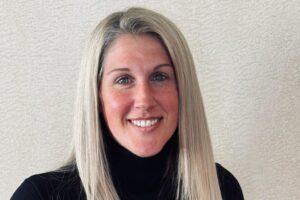
Moving forward, Carter said HAP will be led by a talented professional, Nicole Stallings, who comes from the Maryland Hospital Association.
“She will have the opportunity to build on the work that has already been done,” he said.
That includes the racial health equity initiative, quality improvement strategies and investing in the public health system, among others.
“The pandemic taught us that the foundation organizations that are the largest or second largest employers in each county should be seen as leaders in growth,” he said. “Nicole has the opportunity to create tools to improve relations and build long term commitments to one another.”
As for his next chapter, Carter said he and his wife, Audrey, plan to do all the things they have put on hold while he did this work.
In addition to spending more time with their children and grandchildren, he wants to stay active in the community.
“We want to give back to the community that has been so good to us; to help Pennsylvania continue to be the jewel that it is.”