Sign In
Upcoming Event
 Free Newsletter

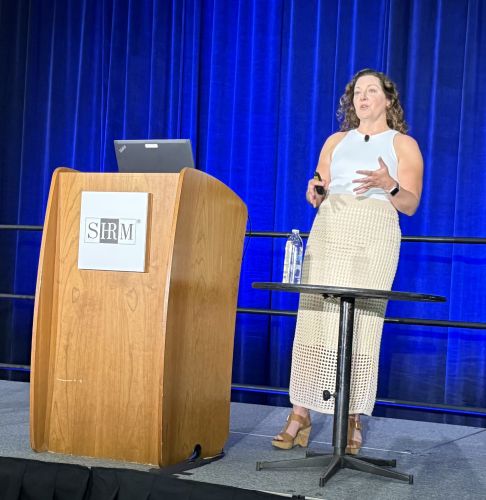
Lauren Winans is CEO and Principal HR Consultant of Next Level Benefits, a nationally recognized HR consulting firm that provides HR expertise to companies. PHOTO/PROVIDED
How HR is navigating an increasingly complex workforce
Ed Gruver//August 13, 2026//


Having close to 25 years of experience and a background with American Eagle Outfitters and Highmark Blue Cross Blue Shield, Lauren Winans brings to her work a combination of corporate HR leadership and advisory work across industries.
Winans is CEO and Principal HR Consultant of Next Level Benefits, a nationally recognized HR consulting firm that provides HR expertise to companies navigating the workforce landscape. Having been featured in Forbes, USA Today, BBC News, NBC News, and The Washington Post, she is considered a media expert on workplace trends, employee engagement, compliance, DEI (Diversity, Equity, and Inclusion), and the evolving role of HR.
Addressing the increasing legal and ethical risks of AI in hiring and in workforce decisions, Winans said that while organizations are moving quickly to adopt AI in hiring and workforce decisions, governance is lagging behind adoption.
“What we are seeing now is that the legal risk is very real,” she stated. “If an AI tool screens out certain candidates or influences decisions in a way that creates bias, the employer is still responsible. It does not shift to the vendor. On the ethical side, people want to understand how decisions are being made about them.
“Whether it is hiring, promotions, or performance, there is a growing expectation of transparency. The companies that are doing this well are treating AI like any other employment tool. They are validating it, documenting how it works, and regularly auditing outcomes.”
Winans spoke to how DEI is being restructured beyond quotas and into more sustainable practices.
“There is also a noticeable shift in how organizations are approaching DEI,” she said. “It is becoming less about hitting specific numbers and more about building fair systems that hold up over time. That means looking closely at how jobs are structured, how skills are assessed, how pay is set, and how people move through the organization.
“The focus is really on embedding equity into everyday processes rather than treating it as a separate initiative. Organizations that take this approach tend to see more consistent and sustainable results.”
Winans pointed to how pay transparency and employee data are reshaping workplace expectations.
“Pay transparency and access to employee data are changing expectations in a big way,” she said. “Employees want to know how their pay is determined, how they compare to others, and what it takes to grow. In many cases, they also have more data at their fingertips to ask those questions.
“That is putting pressure on employers to make sure their compensation practices are consistent and easy to explain. Issues like pay gaps, compression, and inconsistent job leveling are harder to overlook when everything is more visible.”
Winans explained why this is a compliance-heavy year and where companies are the most vulnerable.
“This is shaping up to be a very compliance focused year because several things are happening at once,” she said. “There is new and evolving regulation around pay transparency, AI in employment decisions, worker classification, and data privacy. At the same time, enforcement is becoming more active. Where companies tend to get into trouble is not a lack of intention, but a lack of follow through. They may have policies in place, but not the documentation or internal alignment to back them up.
“AI governance is a common gap, especially where tools were adopted quickly. Compensation is another area, particularly when older practices do not align with newer transparency requirements. The organizations that will be in the strongest position are the ones treating compliance as something ongoing, not something they check off once,” said Winans.