Sign In
Upcoming Event
 Free Newsletter

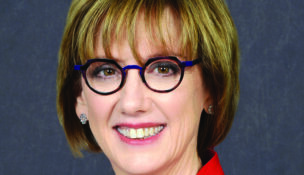
Julia Brinjac: Innovation in state policy
Ioannis Pashakis//September 8, 2020//


When Julia Brinjac, policy director for the Pennsylvania Department of Banking and Securities, first planned for what her career would be, she thought she would need to familiarize herself with one subject matter and find her niche.

Brinjac’s work is instead quite the opposite. As a policy director for the state, Brinjac says she works with an expansive breadth of subject matter, stakeholders and challenges in topics spanning from data security and delivery and inclusion concerns in the financial sector to financial exploitation of seniors and updating the Pennsylvania Banking Code.
Brinjac spoke to the journal about her role in state government, how young people can succeed in the government sector and how the pandemic affected her work.
CPBJ: How would you describe your work as policy director at the state Department of Banking and Securities? What is your day to day like?
Brinjac: As policy director, I see my role as one largely consisting of support, communication, and research. I serve as a dual report to both the Department of Banking & Securities and the Governor’s Policy Office, which makes me a conduit for information and policy priorities in both offices.
Truly, no two days in the policy office are the same, which is one of the joys of my job. One day I may be working on analyzing a new proposed federal regulation or advising on legislation, and the next I may be researching new changes and challenges in financial technology (FinTECH).
What remains consistent is the talent of the staff I work with and the diversity of projects I have the privilege to participate in.
CPBJ: What drove you to work in policy?
Brinjac: I began my career in the Pennsylvania State Senate as a legislative aide with no prior experience and I was stunned at the breadth of subject matter I dealt with daily through bill analysis and covering senate committee hearings. The ability to pivot from one subject to the next became second nature.
I have always considered myself both naturally curious and an “idea person,” and policy work is the place of the possible. I enjoy problem-solving and it is immensely gratifying to be able to utilize unique, out-of-the box thinking daily in my job. It’s a dream to be in a role where I am helping drive the direction of the Commonwealth.
CPBJ: What advice would you give young professionals working in the government sector?
Brinjac: Keep being curious and seek learning experiences or advice from your more seasoned co-workers.
Government touches so many industries and the way it weaves in and out of these sectors creates opportunities for cross-learning that is invaluable. Also, never forget that there are people impacted by everything you do, and government work is ultimately about service to the people impacted by your work.
Young professionals in government are a critical sounding board for policies and implementation of programs. The world changes so rapidly, and younger professionals often have a pulse on how these changes may impact programs that the government currently implements or is seeking to implement.
Keep innovating and offering your perspective because even though your experience may be limited in years, it is incredibly valuable in the context of the world today.
CPBJ: What do you wish you knew going into it?
Brinjac: How fulfilling it would be! Government is often viewed as a red tape entity or the bureaucracy, but it is a critical organization to ensure everything from appropriate market regulation to supporting our most vulnerable citizens.
There is a shift happening in government towards recognizing the need for adaption and innovation. For example, the Commonwealth has the Governor’s Office of Performance through Excellence with the role of helping to cut red tape and help government at all levels become nimbler.
CPBJ: How did you keep sane during quarantine? How did the pandemic affect your work?
Brinjac: COVID has certainly impacted things like my commute or the way I communicate with my staff and co-workers, but other than that, my days remain filled with projects and helping facilitate the priorities of the governor and the department.
If anything, I find that I have more work now than I ever have. For instance, part of my job is keeping an eye on what the federal government is doing, and there has been no shortage of legislation, policy shifts, and regulation.
A great example is the federal Paycheck Protection Program, which helped provide over $20 billion in relief to Pennsylvania’s businesses facilitated through financial institutions across the state in the wake of COVID. There is no shortage of work to be done; just the view out of my office window has changed.
Personally, I find that keeping myself sane during quarantine has been an interesting experience. My fiancé is a nurse and though I worry about him being at work, I am very proud of the work he has done and continues to do.
Given the transition to working from home, it has been more important than ever to use my non-work hours to find creative outlets to relieve stress and re-energize. As a competitive powerlifter, it was hard to abruptly halt my training! I ended up downloading the Peloton app and utilizing a spin bike that had been collecting dust in a corner of my den which reinvigorated my former love of spinning.
I also tried my hand at baking bread, like everyone else, and discovered I have exactly zero aptitude for baking. While quarantine may continue to be a challenge for me, I have discovered that my dog and cats firmly believe that it has been the best thing to ever happen to them.