Sign In
Upcoming Event
 Free Newsletter

LANTA director says pandemic is bringing lasting changes to transit
Stacy Wescoe//August 31, 2020//


In charge of the agency that transports more than 8,000 people to work each day, and another 8,000 to schools, shops and doctor appointments, Owen O’Neil, executive director of the Lehigh and Northampton Transportation Authority is keeping his eye on the road ahead.
Still dealing with major changes to transportation needs and requirements that came about from the COVID-19 pandemic, O’Neil said LANTA is continuing to adapt to the Lehigh Valley’s transportation demands.
The pandemic has had a significant impact on operations, he said. Passenger rides were down about 75% at the peak of the pandemic in March and April and continue to be only at about two thirds of normal capacity as many people continue to work and learn from home. One of his points of pride during the last several months, however, is that LANTA never stopped operating.
“We haven’t missed any service since the beginning,” O’Neil said. “I think were one of the few transportation authorities in the state that can say that, maybe one of the few in the nation.”
Since the pandemic began, LANTA has been making many of the same changes being made in other public spaces. Drivers have personal protective equipment ranging from masks and gloves to face shields and hand sanitizers and buses are being kept at 50% capacity or lower.
But some of the changes will be permanent, including the way the authority is expecting its passengers to pay their fare.
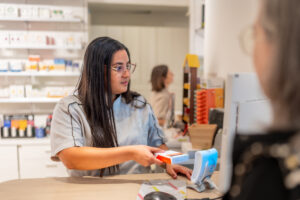
“What we’ve done is deeply discount monthly passes so passengers are swiping and walking by the drivers much more quickly and spending less time at the fare box,” he said.
The authority had also launched a mobile ticketing app right before the pandemic began, which they are encouraging people to download and use so that they can have contactless payment. “You just flash the phone at a reader attached to the fare box,” he said.
They also have backup buses in case a bus on a particularly busy route starts getting too full.
“We told drivers that if they have more than half a passenger load, about 20 passengers, call in and we’ll send another bus out,” he said.

With a reduced number of riders he said it hasn’t been too much of a burden, but as more people are starting to return to work – especially at warehouses – the buses can get full and backup is needed.
He fully expects the dynamics of local transportation needs will be permanently altered by the pandemic, but noted that as businesses come and go and new areas develop transportation needs are always changing.
“We’re always planning for the future, but we don’t know what the new normal will be. Routes that are dramatically down may remain down,” he said.
He also said many manufacturers and warehouses have started staggering shifts, which means adding more bus routes to accommodate employees.
He said the authority is currently looking at changes in service to redirect service to where it is most needed. The following changes were announced Friday:
- Route 325 has been extended to Palmerton, offering connections to Carbon County fixed-route bus service, and access from Walnutport/Slatington to various medical offices in Palmerton.
- Additional evening trips have been added to routes 108 & 212 to better serve St. Luke’s Hospital, Fountain Hill, and Bethlehem’s eastern neighborhoods.
- Because of the Allentown School District’s decision to use virtual instruction only for the first marking period, service on LANTA’s 400 level routes will not operate this fall. Additionally, evening service to and from Lehigh Carbon Community College in Schnecksville on Route 209 has been canceled.
- Because of a new weight restriction on the PA Route 329 Bridge connecting Cementon & Northampton, service across the bridge was stopped on Aug. 14.
- Evening service on Route 103 through Cementon and Coplay has been terminated indefinitely. Service on Route 325 has been adjusted to offer service as late as 8 pm through Cementon and Coplay.
- LANtaFlex Route 507 (West/South Easton) has been expanded south of I-78 to Cedarville Road, providing access to and from Abington Manor and the Cedar Park Community.
O’Neil said he expects more service changes in the future.
“Are the patterns going to go back to where they were before, or are we going to see new patterns? We don’t know,” he said. “Facilities are always being built. We need to make sure we’re providing service where it is needed.”
The authority is also looking at changing the way it offers paratransit services. Those buses pick up people — mainly the elderly or those with disabilities that prevent them from driving – and take them to doctors appoints, the drug store or grocery shopping. They then return later to pick them up and take them home.
“What we’re really serving is trips. Maybe we don’t need to pick them up and take them to the grocery store and then come back to take them home. Maybe we can pick those groceries up and deliver to them,” he said.
With more people becoming comfortable with online shopping for goods and groceries, offering such a service could be a real time and money saver for the authority, while adding convenience to those they serve.
He said even if a senior isn’t up to speed on online ordering, they likely have a family member who can help them. But the trends clearly indicate many more people choosing grocery delivery since the pandemic began.
“We need to see what people’s preference and habits will be,” he said. “Maybe habits picked up during the pandemic will stay.”
The authority is also continuing its mission to go greener.
LANTA just added another compressed natural gas bus, bringing the number of CNG buses to 55. The authority also has 27 diesel hybrid electric buses in its fleet. When the last three remaining diesel buses are retired next February, O’Neil said the fleet will be 100% alternative fuel vehicles.