Sign In
Upcoming Event
 Free Newsletter

Pa.’s independent living services blame low reimbursements for workforce crises
Ioannis Pashakis//November 29, 2021
Pa.’s independent living services blame low reimbursements for workforce crises
Ioannis Pashakis//November 29, 2021//


 Listen to this article
Pennsylvania organizations offering independent living services to people with disabilities are not receiving enough Medicaid reimbursements from the state to keep their employees, say advocates for the state’s Centers for Independent Living, known as CILs.
Earlier this month, a group of CILs, individuals with disabilities, caregivers and legislators met on the steps of the capital to ask the legislature to increase reimbursements for independent living.
The organizations say staffing was an issue among CILs because of low reimbursements before the pandemic and is now in a full-blown workforce crisis because employees left the industry for better paying work.
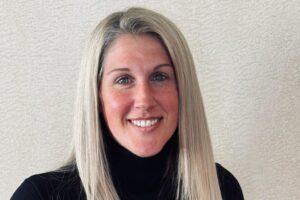
Reimbursement rates for CILs vary across the state with some receiving $17.88 to $19.88 an hour. Reimbursement in neighboring states, such as Ohio and Delaware, are at least $4 higher, said Shona Eakin, CEO of Erie-based Voices for Independence, one of the state’s largest in-home care providers for individuals with disabilities.
Low reimbursements mean that CILs can’t offer employees more than $8 to $12 an hour for homecare work.
“In order for there to be a sustainable market with wages, and maybe even for the first time ever a little bit of health insurance, we need to see a $5 increase,” said Eakin. “We need to see some investment in these rates of reimbursement.”
The last increase in reimbursements was 40 cents in early 2020, which allowed Eakin to increase her employees hourly wage by 70 cents.
“Getting a 40-cent increase after five years of no increases is great but it puts a Band-Aid on a gaping wound,” she said.
Following the rally, Gov. Tom Wolf committed some of his staff to work with the CILs to find solutions to the problems the CILs have posed, but according to the administration, an effort to improve the workforce problem for CILs is already underway.
The state Department of Human Services is awaiting approval from the federal Centers for Medicare and Medicaid Services to allow the state to fund a number of initiatives that would target direct care recruitment and retention, said Brandon Cwalina, press secretary for the department.
The initiatives will be funded through the American Rescue Plan Act, which allows states to leverage a temporary 10% increase in Medicaid reimbursements for home and community-based services.
“This work is essential and life-sustaining, and we are committed to helping recruit and retain dedicated individuals to these positions, as the Wolf Administration has been prior to the pandemic,” said Cwalina. “We are currently awaiting our conditional approval from the Centers for Medicare and Medicaid Serivces, and once that is received, we’ll be able to move forward with implementation.”
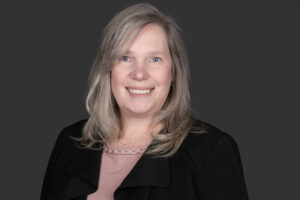
The rally, titled the “Rally for Our Lives,” highlighted another problem CILs are seeing: people with disabilities are reassessed annually by the state and given the number of hours that they can receive services from a CIL weekly. Those hours have been cut drastically for many Pennsylvanians, said Pam Auer, director of advocacy and community engagement at the Center for Independent Living of Central PA.
“People with disabilities receiving services are getting reassessed and that means the services they are receiving are getting reduced,” she said. “Some are saying that the state is going out of order, and they don’t understand why they are being assessed.”
Auer went on to say that some individuals’ hours have been cut so dramatically that they have gone from 126 hours a week with a CIL to 40 seemingly arbitrarily.
“If you had 126 hours and you were cut to 40, how could your needs be met adequately?” said Eakin. “Everyone says that they understand that people want to live at home and not in institutions, but they don’t understand the nuances that are causing the problem.”
Part of the problem is that the state relies too much on informal support, such as someone’s family or friends and not enough on CILs, said Auer.