Sign In
Upcoming Event
 Free Newsletter

SOURCE/PAPUC
Are Pennsylvania’s utilities ready to handle summer heat?
Stacy Wescoe//June 10, 2026//


 Listen to this article
Summer heat taxes the region’s electricity providers, but will they be ready this year?
The Pennsylvania Public Utility Commission has released its 2026 Summer Readiness Overviews to address that issue, looking at the state’s major electric distribution companies and the regional electric grid operator, PJM Interconnection.
According to the reports, Pennsylvania’s electric utilities and PJM have completed extensive preparations for the summer season, including infrastructure upgrades, system maintenance, emergency response planning, storm hardening efforts, and investments in technologies designed to improve reliability and resilience.
The commission said PJM’s summer assessment projects sufficient resources to meet expected electricity demand, while utilities continue to monitor the impacts of changing customer usage patterns, distributed energy resources, electric vehicles, and other emerging factors affecting the grid.
“Pennsylvania’s electric system is operating in a period of significant change, with growing demand, evolving technologies, and increasingly complex operating conditions,” said PUC Chairman Steve DeFrank. “These reports demonstrate the extensive planning and preparation underway across the utility industry and PJM to meet summer reliability challenges. Continued investment, coordination, and operational readiness are critical to ensuring that consumers have access to the safe and reliable electric service they depend on every day.”
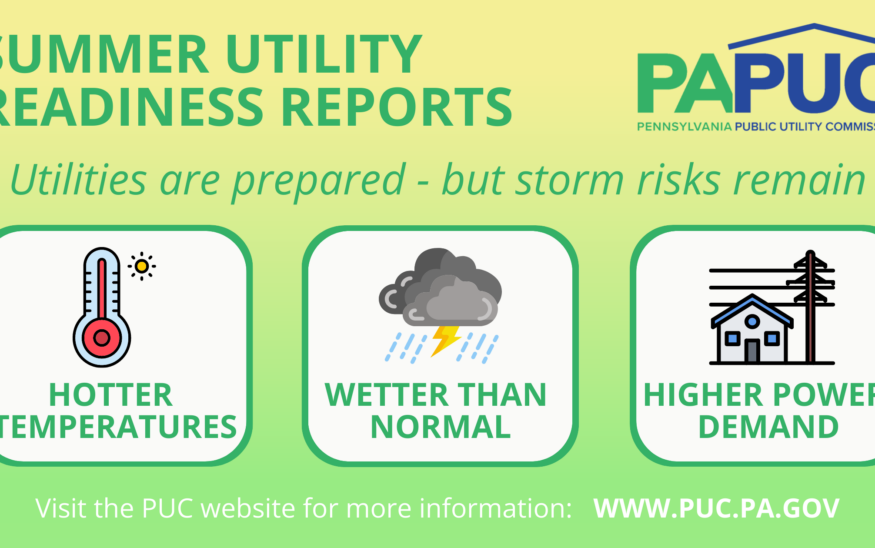
According to PJM’s 2026 Summer Outlook, summer temperatures are expected to be above normal across much of the region, including areas extending eastward from the Appalachian Mountains, while portions of the eastern Mid-Atlantic are forecast to experience wetter-than-normal conditions.
PJM projects a summer peak load of approximately 156,400 megawatts, with a10% possibility of a high-demand scenario reaching approximately 169,100 MW during periods of extreme weather and electricity usage.
PJM reports that it has approximately 180,200 MW of installed generating capacity available to serve customers across its footprint and remains positioned to meet anticipated summer electricity demands under forecast conditions.
According to the reports, utilities continued to make investments in electric infrastructure, equipment upgrades, system inspections, vegetation management, and maintenance programs designed to improve reliability and reduce outage frequency and duration.
Several utilities highlighted the deployment of advanced technologies, including remote monitoring and control systems, drones, automated distribution equipment, and self-healing devices that can reduce the number
The reports also note that several utilities have begun evaluating wildfire preparedness measures as part of broader efforts to address emerging reliability and resiliency risks.