Sign In
Upcoming Event
 Free Newsletter

Logistics and warehousing remain a strong part of regional commercial real estate market
Stacy Wescoe//July 16, 2026
PHOTO/GETTY IMAGES
Logistics and warehousing remain a strong part of regional commercial real estate market
Stacy Wescoe//July 16, 2026//


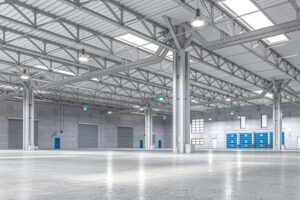
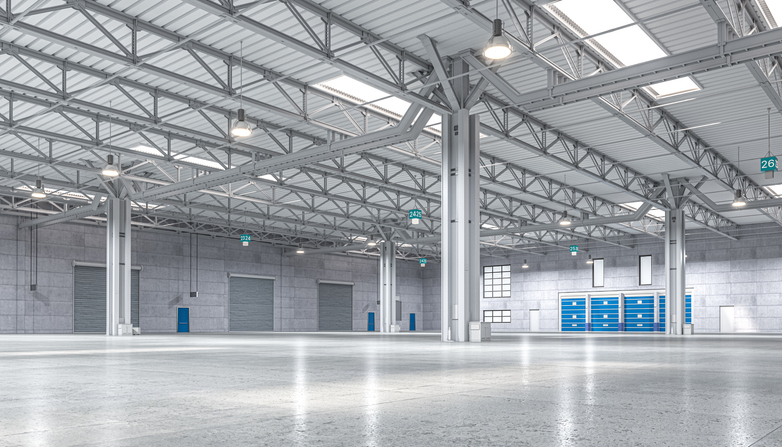
While off from their post pandemic high, warehouses and third-party logistics providers remain a continuing strong presence in the region’s commercial real estate scene.
“We continue to see 3PLs dominate the market,” said Andrew Belcher, first vice president at CBRE. “But looking at it from the perspective of the pandemic – I don’t think we’ll ever get there again.
The market is hot however, Belcher said so far in 2026 there has been 12.3 million square feet of industrial space leased along the I-78/I-81 corridor, with the lion share of that being logistics related. That’s nearing the 15.7 million square feet of industrial real estate space that was leased out in the entirety of 2025.
“It makes everyone feel good about where we are at,” Belcher said.
Currently, warehousing and logistics tenants are looking at larger facilities. Sites of 700,000 square feet and above are seeing the highest demand in the current market.
The demand for smaller properties – under 150,000 square feet is also strong.
But, Belcher said, the industry is starting to get more inquiries about properties in the 300,000 to 700,000 square foot range, so those numbers should be trending higher into the second half of the year.
The Lehigh Valley is still the region of core demand for logistics space, but Belcher said the Northeast and Central Pennsylvania regions continue to see high activity because of a greater availability of space.
He said he’s also seeing what he referred to as a “flight to quality.” While demand is still high, the vacancy rate isn’t as tight as it was a few years ago, so instead of grabbing the first available space, tenants are getting pickier.
Tenants are looking for the usuals like access to workforce and end customers but are now holding out for such things as building amenities, height, available technology such as advanced automation capabilities, access to power and number of cargo bays.
“A building needs to be well equipped,” he said.
As demand continues for logistics and warehousing facilities, the construction pipeline to bring new facilities to market is solid.
Belcher said he is tracking about 8.9 million square feet of industrial and logistics product at the moment along the 78/81 corridor.
“We’re seeing the list of groups on bid sheets grow as more developers look to fill their land pipelines,” Belcher said.
The strongest construction activity is currently in the northeastern Pennsylvania region and Berks County, according to the latest CBRE report.
With the demand, Belcher said lease rates along the corridor are trending upwards as compared to last year.
In the first quarter, the latest quarter for which data is currently available, the corridor was seeing asking rates of $9.01 per square foot, which is up 1.2% over the same period in 2025.
The Lehigh Valley had the highest asking rate at $11.51 per square foot. The Lancaster region followed at $9.36 per square foot. The Reading area was at $8.85 per square foot, and the Scranton region was at $7.18 per square foot