Sign In
Upcoming Event
 Free Newsletter

Culture drives leadership hires at Members 1st FCU
Thomas A. Barstow//July 7, 2025

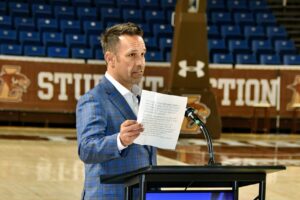
Jon Kirssin vice chair of the board of directors at Members 1st Federal Credit Union. PHOTO/ PROVIDED
Culture drives leadership hires at Members 1st FCU
Thomas A. Barstow//July 7, 2025//


-
Cultural fit is the top priority in executive searches at Members 1st
-
Internal hires Mike Wilson and George Nahodil reflected company values
-
Entrepreneurial thinking and collaboration guide leadership decisions
-
Succession planning includes consultant support and multi-year timelines
When it comes to finding a new leader for an organization, consider whether applicants possess entrepreneurial skills, have a keen ability to collaborate, and will fit your company’s culture. While all of those attributes are important, added Jon Kirssin, one stands out.
“Cultural fit truly is No. 1 on the top of the list of considerations,” said Kirssin, who has led several transition efforts at Members 1st Federal Credit Union. “And I say that with no hesitation.”
Kirssin joined the Enola-based credit union as a member about 55 years ago. After serving in various official capacities with the lending institution, he became chair in 2018 and recently transitioned to vice chair. Along the way, Kirssin helped lead the national searches that tapped George Nahodil to serve as the president and CEO, and then Nahodil’s successor, Mike Wilson, who took the top job in May 2023.
The search processes had considered numerous qualified candidates, some of whom also would have been good fits for the company.
“Our primary consideration was that there be a cultural fit—or an ability to adapt that we felt could work,” Kirssin said. Both Nahodil and Wilson were internal hires, having been with the credit union for years. “It was coincidental that both hires were internal. But, clearly, with culture being our No. 1 priority, they carried quite a bit of weight in the search process.”
On a foundational level, the credit union is based in central Pennsylvania, and this region is quite different when compared to Philadelphia, Reading or Pittsburgh, Kirssin said. The credit union considered proven qualified leaders, including people at banks and credit unions, as well as someone who was retired from the military.
“As it came down to the end, the questions were about how would they grow the credit union and how they would do so while maintaining our culture,” he said.
For the organization to grow, there must be an entrepreneurial spirit that welcomes all ideas. However, decisions at the credit union must be based on its values. For example, subprime lending is not part of the company’s DNA, Kirssin said.
“Every idea should be at least thrown out on the table for discussion and then good decisions can be made following that process,” he said. “And I never want to hear ‘that’s the way we’ve always done it.’ That makes me crazy.”
By following that path, Members 1st has adopted various initiatives over the years. It has created strong relationships with several fintechs that operate nationwide, and it has evolved into financing loans, such as second homes, in other states, Kirssin said as examples.
“We have expanded our areas of opportunity,” he said. “For decades, Members 1st would have said ‘no’ to anything that involved something out of state or anything that wasn’t considered within the box of Members 1st. That has fallen by the wayside. We’ll consider pretty much anything that makes sense.”
The best candidates understood that they needed to demonstrate such entrepreneurial skills while honoring the organization’s proud past—Members 1st is celebrating 75 years in business in 2025.
Test candidates thinking process
One way to determine whether candidates think similarly is to have them solve a problem or offer proposals that they might bring if they were hired. The candidates can then be evaluated on the quality of their ideas and how well they collaborate.
“What products might they consider? What is the candidate’s process to arrive at their goals? What suggestions would they have, and what would they do to execute on those suggestions?” Kirssin said.
That is important because such collaboration is the way leaders interact at the credit union.
“We have a very distinct relationship between the board and CEO, and it is an extremely collaborative scenario,” he said, adding that candidates needed to show their ability to work in that environment.
Ensuring a good fit also means planning years ahead by developing succession programs with clearly stated goals and deadlines. That process itself is a business plan, he suggested.
“Give it more time than you think it will take,” he said, “because it will take more time than you think.”
An example of that planning is Kirssin’s own transition. He had been chair of the board until recently and oversaw the transition to his successor, Ryan Colquhoun. An entrepreneur and attorney, Colquhoun had been the board’s vice chair. Colquhoun, Kirssin and Wilson met routinely long before Kirssin and Colquhoun eventually switched positions in early April, with Kirssin taking on the vice chair role.
Collegiality is important, too.
“It’s not a matter of ‘I’m the boss and you’re the subordinate’ kind of talking,” Kirssin said. “It’s a matter of talking about what is going on and how can we help each other and what should we be working on.”
Consultants
His other advice is to make sure that you hire the right people to do the heavy lifting during the search process. In both CEO searches, professional companies acted as the main interface between the board and the candidates.
“If you want a traditional headhunter, that’s one way you look at it,” Kirssin said. “If you want a business consultant who is then going to do a nationwide search, that’s what I chose for the second succession because we wanted a consultant who understood our business.”
A traditional headhunter might not get to know a company before searching for candidates. A consultant will interview board members and develop a keen understanding of who will best lead going forward. That way, board members will be open and honest about the candidates brought in for interviews, he said.
Either a headhunter or consultant can be a good choice, Kirssin said, but companies should know the difference.
As Kirssin looks back on the 75-year history of the credit union, he recalled his father who served on the board long ago. In its annual report from the end of 2024, the company reported more than $8 billion in assets and over 600,000 members in central Pennsylvania.
“The credit union runs deep in my veins,” Kirssin said. “My father, now long deceased, would be so pleased and proud of what Members 1st has become.”