Sign In
Upcoming Event
 Free Newsletter

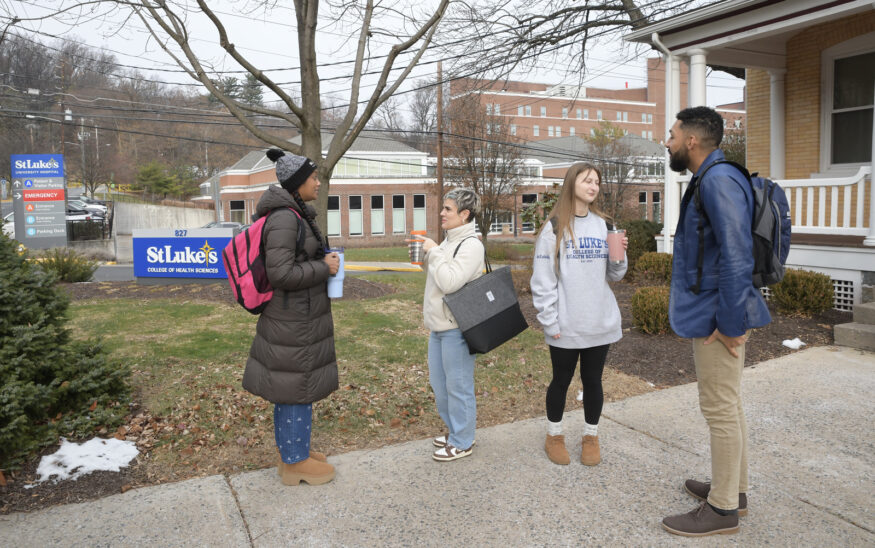
St. Luke’s College of Health Sciences is now accepting applications for its inaugural class starting in May, offering nursing, radiography and respiratory care degrees. PHOTO/SLUHN
St. Luke’s begins accepting students for College of Health Sciences
Stacy Wescoe//January 9, 2026//


In an effort to strengthen the region’s health care workforce, St. Luke’s has announced that its newly created College of Health Sciences has now begun accepting applications for its inaugural class, which will start in May.
The health network received approval to create the St. Luke’s College of Health Sciences from the Pennsylvania Department of Education in October.
The College, which will be located on the campus of St. Luke’s University Hospital – Bethlehem, will be offering degrees in Radiography (Associate Degree) Respiratory Care (Associate Degree) and RN to BSN (Bachelor’s Degree)
In addition to its degree-granting programs, St, Luke’s said the college will offer general education coursework.
“This is a historic milestone for the Lehigh Valley,” said Mary Grace Simcox, the first president of the St. Luke’s College of Health Sciences. “The launch of the St. Luke’s College of Health Sciences reflects a bold commitment to strengthening our health care workforce by providing an affordable, local pathway to high-demand careers complete with guaranteed clinical placements, hands-on learning, small class sizes, and clear opportunities for professional advancement.”
St. Luke’s partnerships with regional colleges and universities will continue while the new college expands the network’s ability to address workforce shortages in critical health care roles by broadening access to education.
St. Luke’s said that according to the U.S. Bureau of Labor Statistics, the health care and social assistance sector is projected to experience the largest job growth of any industry between 2024 and 2034, driven by an aging population and persistent workforce shortages.